
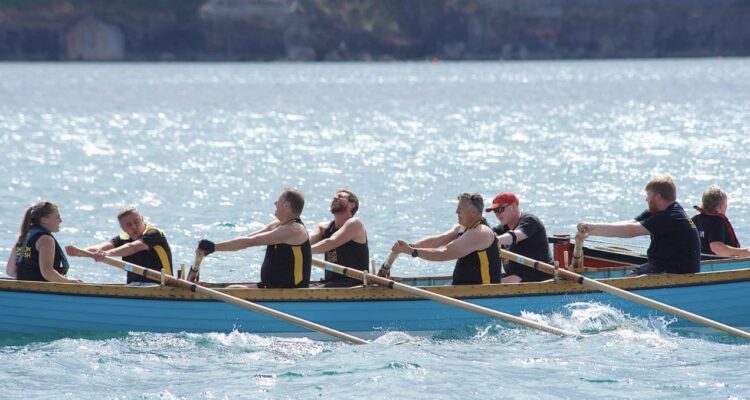
There are many benefits to gig rowing. It is a great activity for improving cardiovascular fitness, building core balance, developing muscle strength and much more. The nature of the sport makes it very inclusive, with all ages and abilities able to experience these benefits.
As we head towards WPGC 2024 and training ramps up, rowers can become more susceptible to injury. Sports Rehabilitation Therapist, Jasmine Mills explained to us that despite being a low impact sport, there is still a considerable load going through our back and legs in gig rowing. This makes it important to incorporate injury prevention methods into your training.
Jasmine told us that the most common injuries are often a result of poor technique, high volume or high intensity training. She explained that recent research has proved targeted strength training to be a very effective means of injury prevention and she recommends that you prepare your body for the load.
“You should make yourself as strong as possible, that’s what stops you getting injured.”
Jasmine explained that most injuries appear in the lumbopelvic region, so gig rowers should target the posterior chain (the glutes, hamstrings, calves, erector spinae and lats) during strength training to help reduce reliance on their back.
“Good strengthening exercises for this muscle group include romanian deadlift, single leg romanian deadlift, deadlift, back squat, hip thrust, bent over row, pull up lat pulldown. You can use resistance bands, dumbbells and a cable machine to incorporate functional stabilisation into these movements.”
Jasmine also pointed out the importance of involving ‘chaos’ into the exercise. For example, rather than just using a shoulder press machine where the joint is really stable, a standing dumbbell overhead press will make the whole joint work to stay stable.
“Exercises that make the shoulder have to react to the instability will make your body more resilient in sea conditions when the chop can be unpredictable. Bosu ball press ups, farmers carry, dumbbell lateral raises are other great examples of stabiliser movements.”
Rowers can further support injury prevention by having a good awareness of their core. Jasmine explained that it is good to know when and how to engage such as when you lean back towards the finish your abs and glutes should be engaged to stop the back going into hyperextension.
“When you lean back towards the finish your abs and glutes should be engaged to stop the back going into hyperextension. Knowing how to make the core muscles work is more important than being able to do a plank for ages.”
Using time before sessions to do a land based warm up is also recommended. Jasmine told us that doing some simple activation exercises before getting into the boat can help rowers minimise their risk of injury. Having a better understanding of how to use their muscle groups more effectively, can help to improve technique in the boat.
“If clubs have the time to get down half an hour or even just 15 minutes early, it would be so much better than getting straight in the boat. Especially in the winter when it’s cold.”
Jasmine’s suggested warm up activation routine encourages gig rowers to focus on feeling the muscles working, rather than speeding through or using the heaviest resistance possible. A warm up might include 10 repetitions of exercises like resistance banded squats, calf raises and resistance band standing rows.
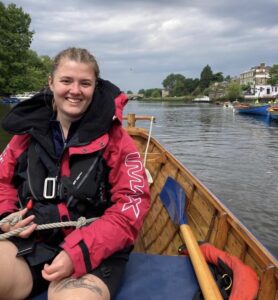
Originally a member of Brixham Gig Club, Jasmine Mills moved to London to study at St Mary’s University, Twickenham, where she later joined London Cornish Pilot Gig Club. Jasmine is now the Head Coach at London Cornish Pilot Gig Club where she uses her knowledge of sports rehabilitation to lead sessions and build training programmes.
“I’ve been Head Coach for London Cornish since November 2022. The role involves driving the clubs’ regatta attendances, planning our own regatta and overseeing selection for the big CPGA events, along with the club captains. My favourite part about coaching and coxing is when a rower finally just ‘gets’ something they’ve been working on for a while”.
If you would like some further support or a 1-1 consultation with Jasmine, contact her via email jasminemills.sportrehab@gmail.com or whatsapp on 07848 960509.

No Comments on "Injury Prevention for Gig Rowers"