


Buoyed up by your success at the Scillies, you and your crew no doubt made grand plans for summer racing. You’ve eyed up your competition and you know who you’d like to go and beat. The evenings are light so late, every crew can get out for multiple sessions a week. Summer training is the best. Light evenings, warm sunshine, flat calm water. What could be better?
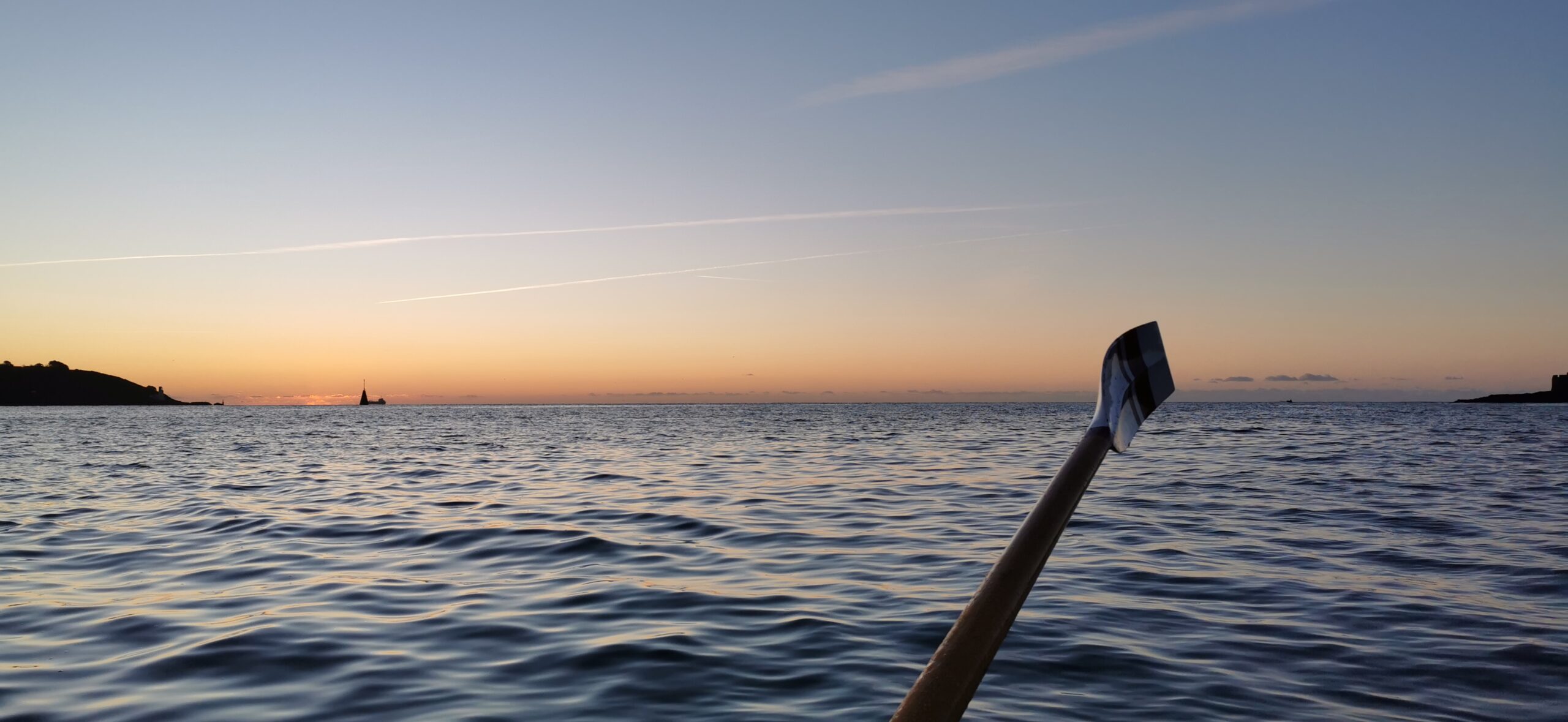
As I write this the rain is hammering down hard and I can’t think of many things I’d like to do less than go and get in a boat for a few hours.
The reality of summer training is a lot like that. We have the best of intentions, but it’s actually really difficult to stick to it. There’s unlikely to be a full week between now and the Newquay Champs when at least one of your crew isn’t on holiday, or at a festival, or a wedding… Plus the temptation of the post-Scillies beers rolled into cocktails and beach barbeques. And all of a sudden, that summer of rowing dominance has petered out.
But don’t panic. Your summer race season is not over and there is plenty of really good stuff about the seeming trials and tribulations of summer rowing.
- Squad Bonding. This is the time to encourage newer, less experienced rowers. Rather than leaving your emerging rowers languishing together in a development crew, get them in the boat. Newer rowers will develop so much more quickly if they have the opportunity to row with more experienced crews. This will then give you a wider pool of rowers to select from.
- Test Your Flexibility. No, I’m not suggesting you take up yoga (although it would probably be beneficial). Instead, take this opportunity to row in different positions in the boat. It’s easy to get stuck in the ‘I’m a 2 rower’ rut and never get out of it. Take yourself out of your comfort zone, help your crew out, and get in a different position. Quite aside from anything else, rowers who can slot into different seats are a selector’s dream.
- Take The Initiative. Every club organises their race crews differently, but on the whole they will only select crews for the ‘big’ events, and leave the rest to rowers. If you’re lucky enough to have a race captain, get in touch and see if you can help organise. Remember, gig rowing clubs are all voluntarily run, so more helping hands are always appreciated. It may well be that if you want to race more, you need to get out there, rally up a crew and get racing. Don’t sit around waiting for someone to ask you!
- Club Cohesion. There’s no getting away from the fact that you’re unlikely to be able to keep the same crew for every race or training season. Now’s a great time to review your club technique and make sure you’re all aiming for the same thing! Mix up your crews and you’ll quickly notice differences, even within clubs with the best of intentions. As ever, I really recommend filming your crews on a regular basis. It makes it so much easier to see discrepancies in technique and will pay dividends in making crew changes so much easier!
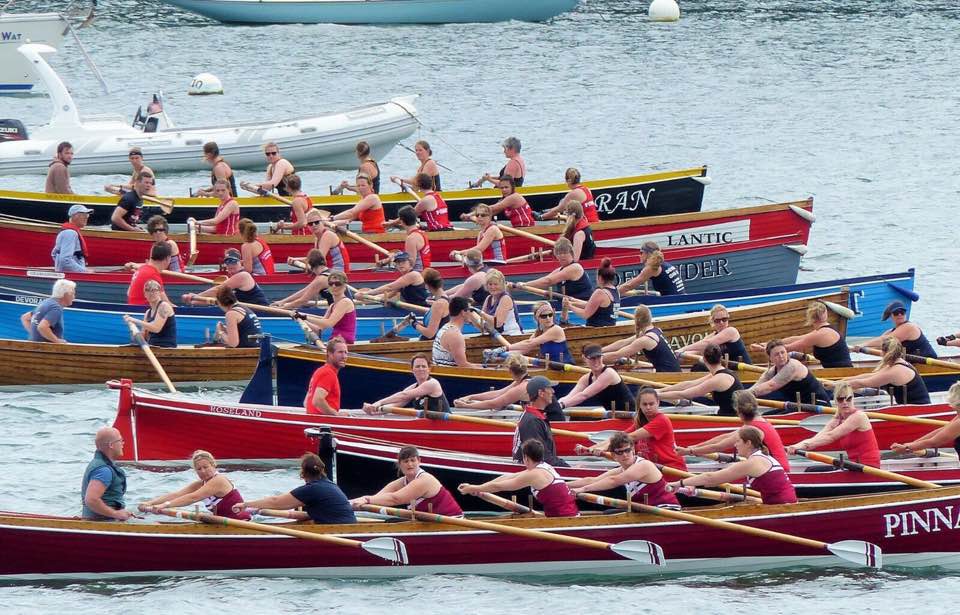
Once you’ve got your squad or crew together. The next question is what you actually need to do in terms of training.
Most of our summer race courses are sprints, rather than endurance. Crews should be working on sprint pieces and fitness both on and off the water. On the water, push the rates up. Depending on the fitness of the crew, you should be working towards upwards of rate 32 for 1-3 minute sprints. Keeping the Newquay Championships in mind, you want to also be considering your ability as a crew to recover and push again. Especially if this was a weakness at Scillies.
Get the majority of your training on the water, taking advantage of the milder weather and extra hours of daylight. Prioritise sprint training with start sequences, 1-6 minute sprint pieces, race breakdowns, and 15-20 minute rate changing pieces, working between rate 28-32. If you’re able to get on the water for more than 3 sessions a week, schedule in a longer, lower rate recovery row as well. If you’re looking for crew or club programming, drop me an email at the address below.

Off the water, continue to work on strength and power. Deadlifts, squats and lunges are your best friends. As a basic starting point, build to being able to do 3 sets of 10, aiming to increase the weight by 2.5-5kg every week or two weeks, depending on how regular your training sessions are. Add in a bit of upper body work too. Ideal movements are bent over row and chest press (get that push and pull movement as strong as you can and the oar will feel light as a feather) and all the core work you can handle. Get in touch if you’re interested in small group, 1-2-1 sessions or gym programming.

If you’re looking for an endurance challenge, then check out The Great River Race in London on September 16th and Monster the Loch on Loch Ness on September 23rd. Both take a lot of hard work and commitment, not to mention a brave tower, but they’re equally awesome and forever memorable events.
For bespoke plans, crew or club programming, get in touch! GigRower members get a 20% discount on all sessions and plans.
Polly 07915698558 | pollytonkins@gmail.com | www.pollytonkins.co.uk

Words and images courtesy of Polly Tonkins

No Comments on "Summer Training Tips"