

Your heart’s pounding. Hands grip your oar. You can hear the blood rushing in your ears. Adrenaline courses through your body as you wait for the ‘Go!’
You’re not alone. Every rower feels exactly the same. There are very few sights and sounds in sport (or life for that matter!) that compare to the start line of the World Pilot Gig Championships in the Isles of Scilly.
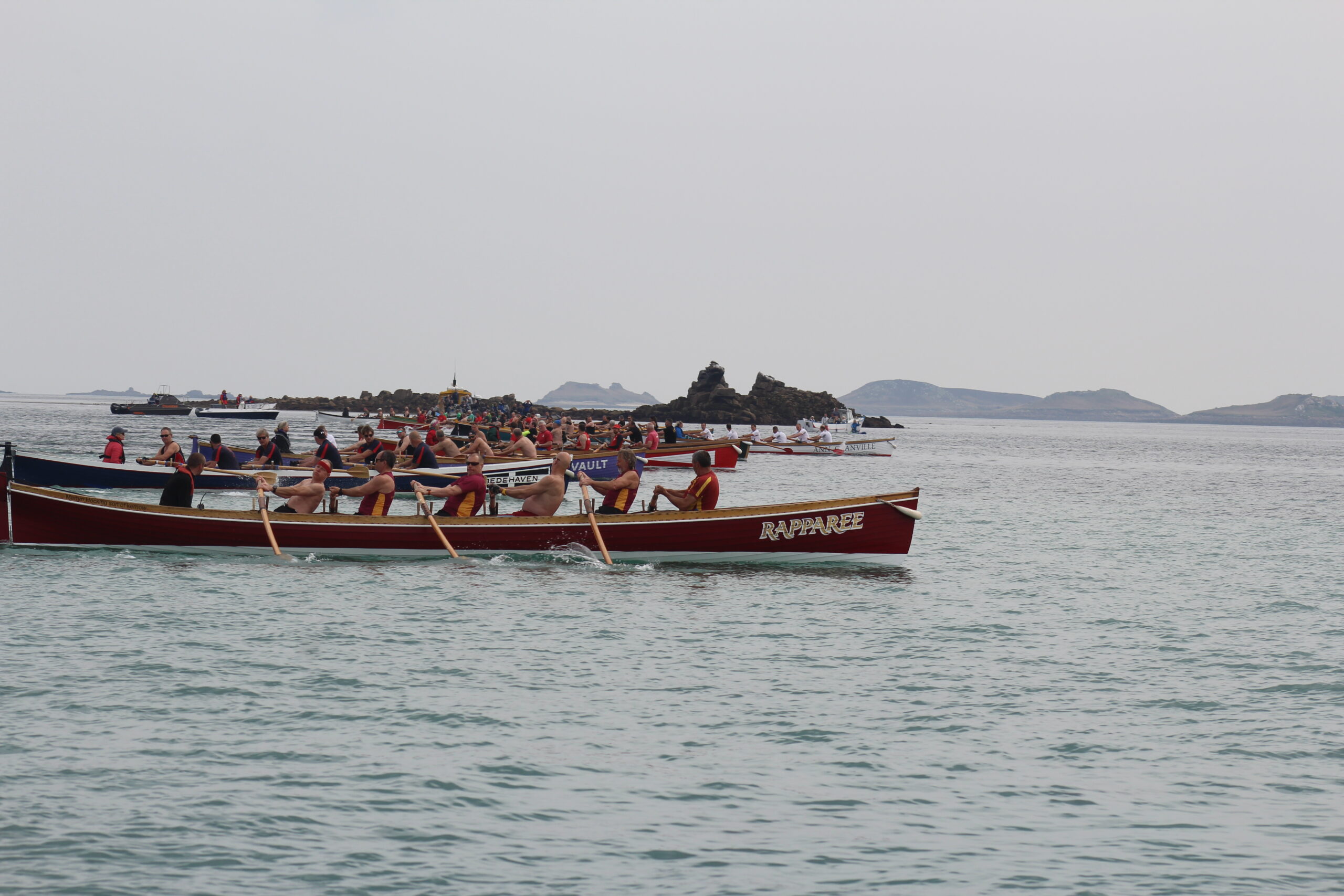
Photo Credit Beckie Chudleigh
Surrounded by over a hundred gigs, the shouts of coxes bringing their crews into order, hundreds of oars slapping on the water, the St Agnes race is totally unique. It’s one of the best places you’ll ever find yourself. And it can be one of the most nerve wracking. This year, why not make sure you are the most prepared you’ve ever been by getting your training plan on point and following it through to make that moment beautiful and full of potential, not fear!
What do you want?
How did your crew do last year? And what are you hoping to achieve this year? What are your club or crew aspirations? Make sure that everyone (including your cox) knows what your goals are and agrees with them. Want to rank a heat higher than last year? Want to make sure that you stay in the same heat after the St Agnes Race? Want to secure that elusive second gig for your club next year? Whatever it is, figure out where you want to be at the end of the weekend, and work backwards from there.
Now you’ve got the what, you need the how. Be brutally honest with yourselves as a crew to figure out what you need to do in order to achieve your goals.
Keen to stay where you place in the St Agnes race? Then you need to work on stamina. If you only had one good race in you last year, the focus now should be on maximising your recovery and ability to go again. Include back-to-back high intensity sessions, with plenty of high stroke rate work. Focus on power and ratio in your stroke, not just whipping the rate up. Make sure you have a race plan: breaking the Nut Rock races into 3 minute sections, with a clear start progression, steadier mid-race rates, and a solid finish. Also work on specific calls for short bursts of higher stroke rates, or harder pulls in the middle of the race to get you past other boats or get you out of tricky water.
Need to improve your cohesion as a crew? Get that camera out. Film your crew and then break it down in a positive feedback session. You’re not trying to knock each other down or beat yourself up for being the weak link in the crew. You’re identifying inconsistencies in your technique and as a crew, and figuring out how to eliminate them. Whether that’s spotting that only half of you are doing hands away, or that the rest of the crew is beating the stroke in at the catch, filming your sessions will help you identify errors, and allow you to track your progress as a crew.
Want to place higher than you did last year? Keen for a podium finish? Crews are getting more and more serious about their training, and if you want to get better or even just hold on to your top 12 position from last year, you have to be willing to put in the hard hours. Training now needs to encompass more than just a few jolly outings a week in the boat. Strength training, cv conditioning and even nutrition are elements to consider. This is an amateur sport but the best crews are going to be putting in 5+ sessions a week, giving up booze before Scillies and hitting the gym alongside boat training.
So what should spring training look like?
In a nutshell, speed and stamina. As the race season approaches you want to be increasing your stroke rates, even going above what you’re aiming for as a race pace. Be strict on your breaks in the boat so that you get used to working hard, resting for a few minutes and working hard again. Hopefully you’ve been able to get out regularly through the winter for some long slow training sessions. Now is the time to start ramping up the speed and precision. If you’re able to get out more than three times a week, include a recovery row. But if you’re short on boat time, prioritise speed and sprint training.
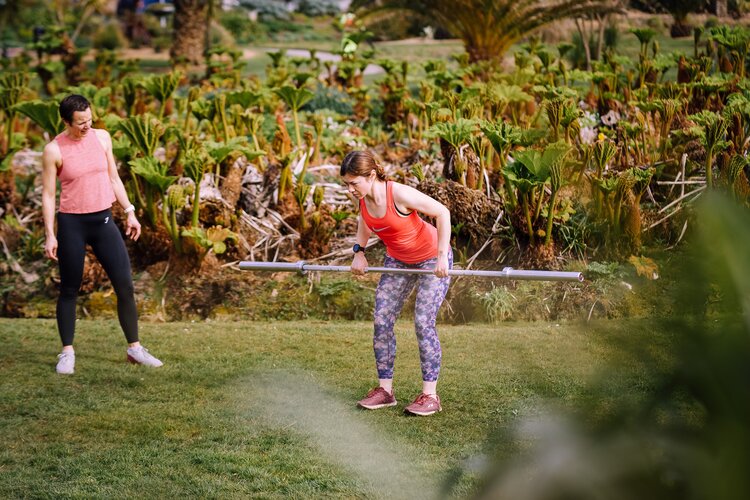
Photo Credit Polly Tonkins
Off the water, you should seriously consider adding in strength training, if you’re not already. Strength training is hugely beneficial to rowers, especially whole body lifts like deadlifts and squats; remember rowing is all about the leg drive. You ideally want to follow a strength training plan focussing on lower body and core strength. The great thing about strength training is that, unlike trying to get the whole crew together at the same time, you can work on it individually, at a time and place to suit you. Join a gym, go to a group session or just get a couple of kettlebells to do home workouts, whatever suits you will work. If you’re not sure where to start and would like some help and advice, I’d love to help!

Photo Credit Polly Tonkins
We’ve all had to accept the ergo as part of being a successful gig rower. But it doesn’t have to be endless boring hours just trying to get your split time down. In fact, it can be more helpful to avoid looking at your split time and structuring your workout around hitting specific stroke rates for set times or distances. Just like any workout or boat session, you should follow a specific plan depending on your goal, with varying workouts to help your body adapt and improve.
Get your training plan sorted now – it will pay dividends during race season next year. If you need any help, advice or support, get in touch. Gig Rower members get 20% discount on all plans.
A bit about me
In 2006, when I finished university, I had an operation where my pelvis was broken in three places and my hip socket re positioned so I could be pain free and walk properly.
I was in a wheelchair for six months. I had to learn to walk again. Sport, fitness and physical exercise were the furthest things from my mind.
In fact, I’ve had to learn how to walk about four times now. That operation was the last in a long line of different surgeries I’d had since I was a toddler and diagnosed with hip dysplasia in both hips (this is where the hip socket isn’t formed properly). You can watch a video of me talking about it here or check it out below
‘Sporty’ I was not. But I was determined. And as the years have gone by, sport and fitness have grown to play a huge role in my life and shape the person I am today.
It started with gig rowing… and what a start it was. On my very first trip out in a boat I slid back off my seat. My core muscles were non-existent. So I floundered ungainly on my back to much laughter. Yet, she persevered. Since that inauspicious outing I’ve gone on to row in the final of the World Pilot Gig Championships three times.
Now, as well as being a devoted gig-rower, I’m a keen cyclist and a very slow runner. I joined the cult of CrossFit after I had my daughter in 2015 and the combination of strength and fitness training has honestly transformed my life.
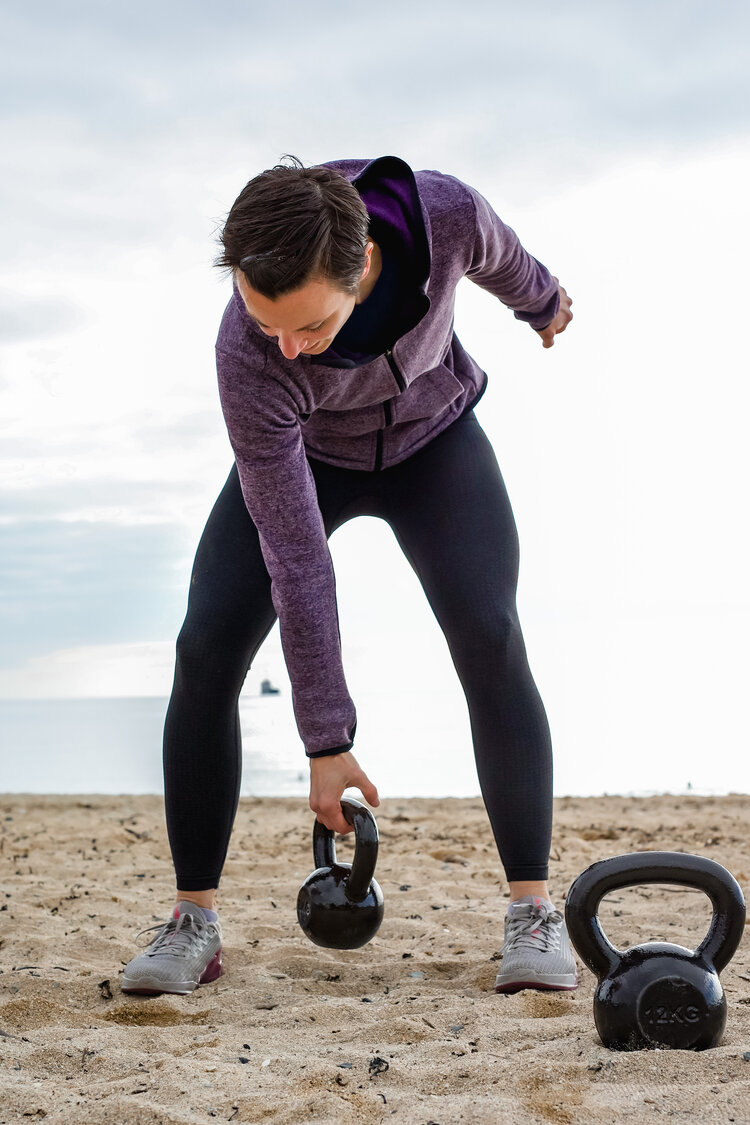
Photo Credit Polly Tonkins
Let me share what I’ve learnt with you. Whatever your goals – whether they’re for the coming rowing season or simply for your lifestyle – I can help you achieve them. And we’ll have fun while we do it!
I offer one-to-one or small group sessions in the Falmouth and Truro area, customised online plans with virtual support and weekly check-ins for those of you further afield, and nutrition plans to help you be fighting fit for race day.
If you need any help, advice or support, I’d love to work with you and GigRower members get 20% discount on all sessions and plans.
Polly 07915698558 | pollytonkins@gmail.com | www.pollytonkins.co.uk

No Comments on "Tips to support Spring training"