
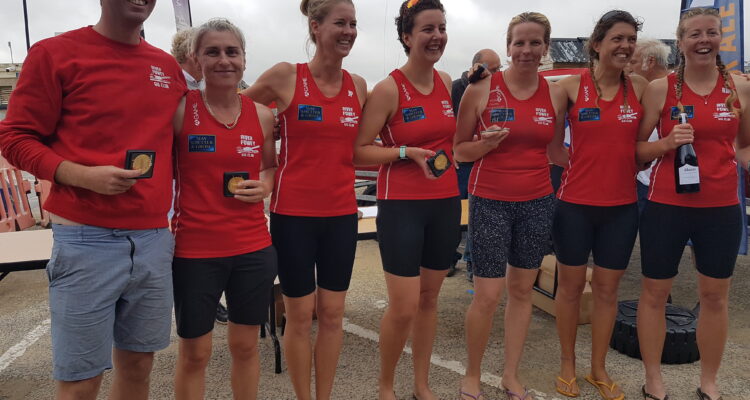
In August 2022, The Royal St John’s regatta (the oldest organised sporting event in North America) off the coast of Newfoundland made a landmark decision to, for the first time, allow its female athletes to race the long course across Quidi Vidi Lake . After decades of campaigning for an equal course, the women were delighted to be given the opportunity to prove they were by no means ‘the weaker sex’ and were more than capable of racing the whole distance.
The first ever women’s race on the long course has wrapped with Verso winning in 10:28.
— Brian Madore (@bmadorevocm) August 4, 2022
Meanwhile, on the opposite side of the Atlantic, history was also quietly being made in the final heat of the Newquay Cornish Pilot Gig County championships, a traditional sporting event held annually in Cornwall. In September 2022, female rowers were, for the first time, allowed to race two laps of the course instead of just the one, an honour traditionally reserved only for male participants.
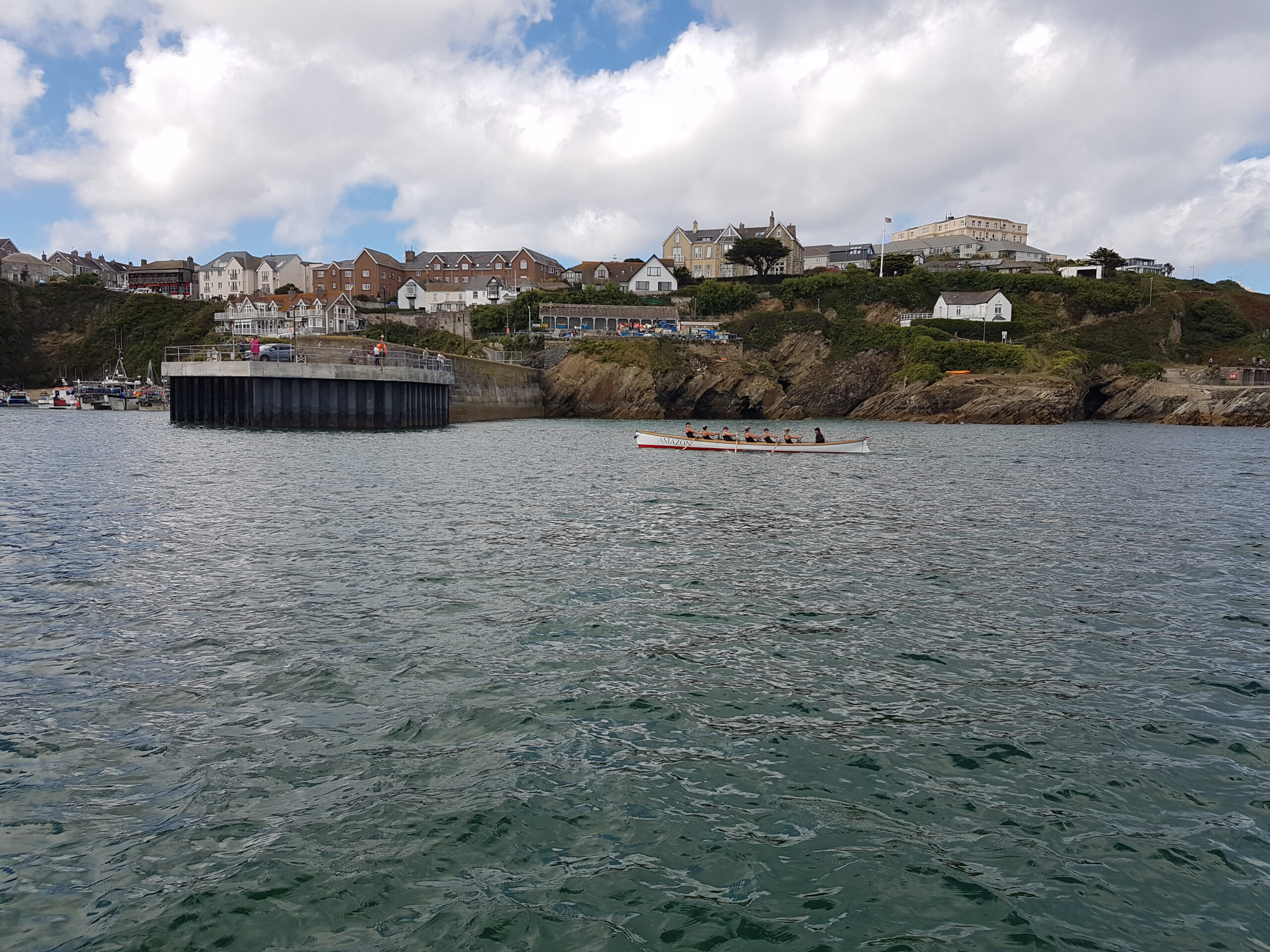
It may seem outrageously backwards that it took until 2022 to bring such a major event in the Cornish rowing calendar in line with modern standards of gender equality. Although, perhaps not so hard to believe when you consider that it wasn’t until 2012 (when women’s boxing was added to the London Olympics) that women were able to compete in every sport at the event. Plus, it took until 2015 for women to be permitted to join the Oxford and Cambridge rowing race on the same televised day.
You may already be aware that in Cornwall, we also have a particularly ‘Cornish’ laid -back attitude. Known locally as doing things ‘dreckly’ can loosely be translated into an unspecified time, or at some time later. For example:
‘’Fixing that fence post/painting that wall/sorting gender inequality in our national sport… we’ll probably get around to it eventually… at some point” 🤷
But if gig rowing is to be called antiquated, this is largely due to the huge amounts of energy and passion that has gone into keeping the sport as close to its historical roots as possible. The boats are still skillfully made from elm by traditional boat builders using the lines of a sleek 1930’s racing gig ‘Treffry’. Being ‘behind the times’ and rowing boats exactly as one’s forebears might have done using 13ft long wooden oars, is what makes the sport so easy to fall in love with.
Then there is the charming informality of gig rowing regattas. Courses and start lines can often be decided on the day, depending on the weather, sea conditions, and how many safety boats turn up (see depending on the weather). Behind the scenes, gently guiding the proceeds of the day you might find one or two local ‘Cornish old boys’ who’ve either built, rowed or raced (or all three) traditional boats all their lives. Many of such men were integral to the revival of gig rowing during the 70’s and 80’s including the late Ralph Bird, the first president of the Pilot Gig Association and it’s first chairman David Muirhead (to mention but a few) who did great work standardising boat specifications and formalising the etiquette and codes of conduct we use in gig racing today.
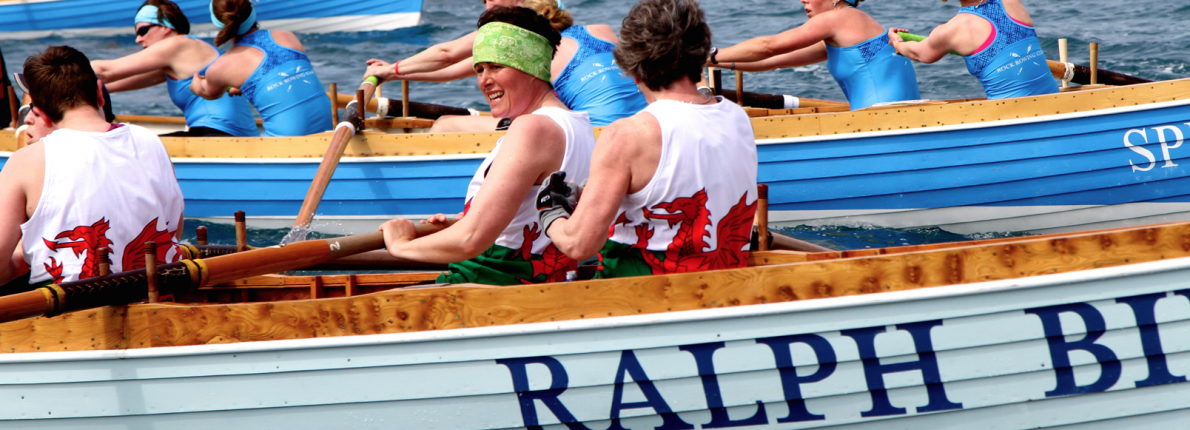
However as the sport has grown exponentially (over the last twenty years in particular) there has been increasing pressure from rowers to make the sport even more regulated and professional. This is no mean feat for a mostly volunteer-run, amateur heritage sport with boats of all ages (some possibly springing a leak and taking on water here and there) on a blowy offshore start line where a crew at one end of the line might have huge advantages from wind and tide compared to a boat on the other end. There has been a recent trend towards using GPS trackers and drones but how exactly these new technologies can help make racing at sea fairer for gig rowers isn’t really clear yet.
However, there is no doubt that gig rowing is ahead of the times when it comes to female representation. The most recent data from the CPGA showed 54% of registered competition rowers were women. This contrasts with findings from across the UK where women are on average represented in local sports by only 35%. Gig rowing’s success here, has resulted in the development of an evolving skill set in the women’s competitive squads which is starting to heavily influence what was once a mostly male-dominated sport.
These are women who have been competing for 20-30 years and achieved successful rowing and coxing careers spanning all age categories – Juniors, Open, Vets (40+) and supervets (50+) and have the medals to show for it. There are also more female rowers taking their training as seriously as if they were rowing professionally – learning Olympic lifting, sports psychology, training in specific heart rate zones and being mindful of their sleep and nutrition. These are women who have fully embraced training equally alongside men in the gym and on the water, and they’re not afraid to call out sexism in the sport when they see it.
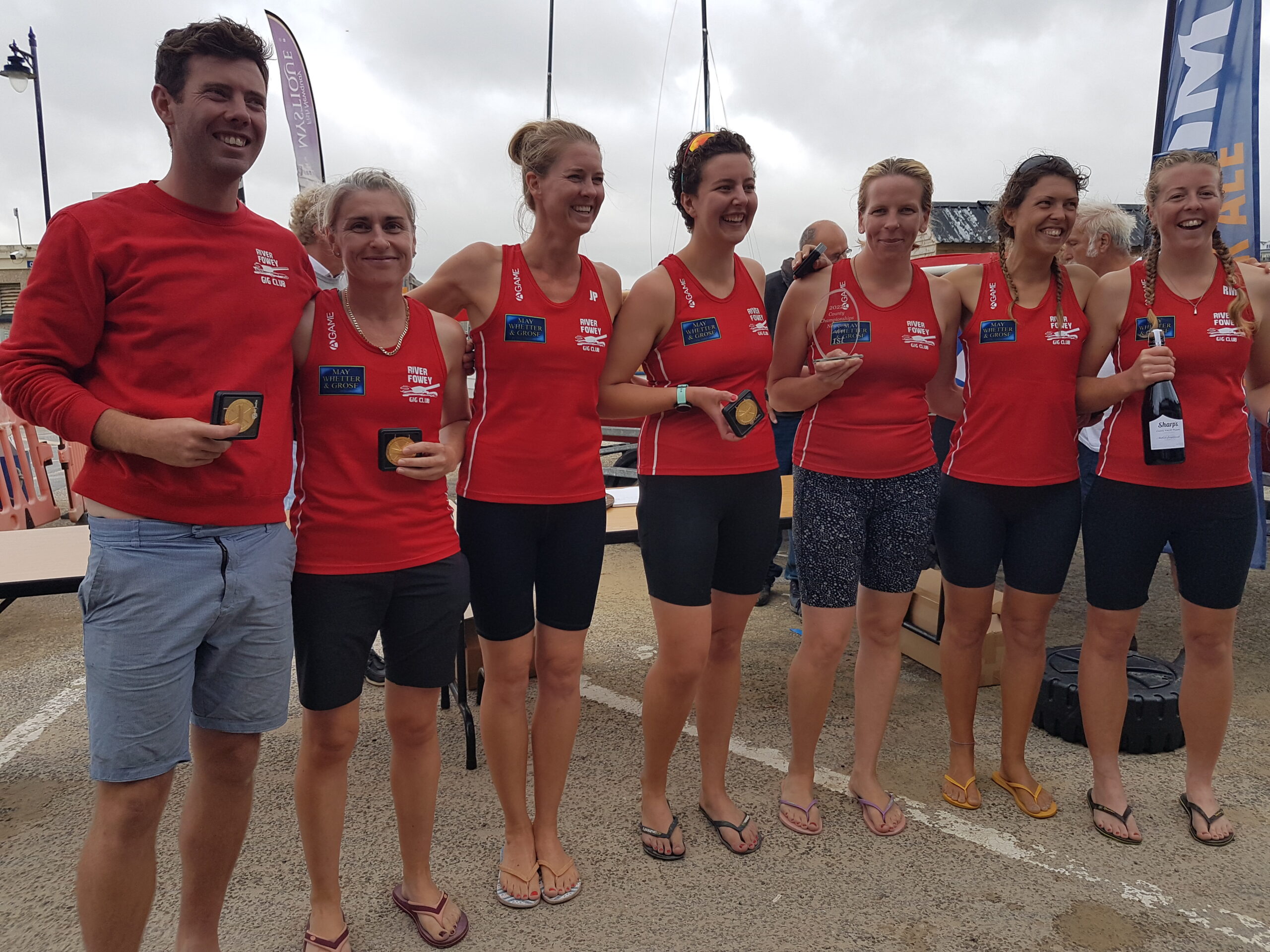
One such athlete is Newquay rower Nicola Murdoch (41) who started rowing skiffs as a young teenager and has never looked back since. She has numerous rowing and coxing achievements to her name including winning County Championships in 2013 and the World Championships in 2015. It was Nicola who, driven by her competitive nature and love for the sport, finally instigated the major change needed at the County Championships this year. She told me
“The reason being purely based on equality – the men have a longer final for their championships, the juniors have a longer final for their championships, the women don’t. I wanted to change that. I canvassed representatives from the top 6 crews from the World Championships 2022 asking for their feedback on whether to increase the length of the final and they were all unanimous in wanting it to be longer, but there wasn’t a consensus on how much longer, so I went for it!”
The feedback from the first women who took part in this landmark Championships has been overwhelmingly positive. Charlotte Roberts (42) represented Mounts Bay in the final, told me:
“It was just incredible to be part of ..when we were around the harbour turn (marking the start of the second lap) it was a great feeling to be part of something new, part of something that’s challenging inequality.”
Rachel Straker (29) from Truro gig club was delighted to be rowing in the final of the County Championships for the first time this year. She told me
“It was amazing to think that we are part of history here, and also hopefully finally gaining that final bit of respect ….even though we haven’t got the physiological advantages the men have, we can still perform to that top level.”
This gender equal final looks set to remain in place for the future county championships in Cornwall, and for our rowing cousins over in Newfoundland. But the world keeps on changing and there are still many challenges ahead.
How do we keep rowing inclusive to a growing community of young people identifying as transgender or non-binary?
In the past, sexism in sport was used to maintain the status quo and keep women seen as ‘less than’. One only has to think of that shocking 1967 black and white image of the first female marathon runner Katherine Switzer being brutally shoved off the road by men who believed she had no right to be there. We have to be careful we don’t repeat history’s mistakes.
Given that gig rowing already has an above average representation of women compared to the rest of the UK, I’m hopeful it will find a way. Can a traditional sport ever be modern? I guess we’ll find out… dreckly!

Great article. It’s also well overdue for female gig rower categories to be called Women’s rather than the outdated sexist term ‘Ladies’. I have personally been campaigning for this a long time. There’s no such thing as sports ladies in other competitive sports we are sportswomen! It’s a relic from the past.