
No matter how many times you’ve coxed the World Pilot Gig Championships, there is always a variable that changes it each year. Lots of people would consider straight line racing the easiest format in the gig racing world, however year upon year, the challenge of navigating the World Pilot Gig Championships ramps up.
It’s a lot of pressure, isn’t it? You sit there with your crew on the start line of the St Agnes race after a winter’s worth of work ready to see where you’re at. You’ve got very little idea of where you’ll place – but you have a sense of your key rivals from Three Rivers and other event results.
One start line over a mile long. You’ve studied the berth sheet so that you know which ‘pod’ you’re in. You’ve got your crew to the line in plenty of time and now you’re sitting, bobbing behind waiting for the countdown to begin. This part of the race is all about managing the emotions and expectations of your crew: some will be nervous, some will be excited and some will be chomping at the bit due to a massive hit of caffeine. The infamous bucket may be passed up and down the boat and you may spend a period of time facing the stern to protect the blushes of your crew. Before long, the dulcet tones of Keith Hale will issue from the radio informing you of the time remaining before the start – usually ten minutes.
There’s a number of decisions to make here, all of which are a quick calculation of wind, tide and the other 130 boats around you. The Agnes race won’t earn a crew any medals, but disqualifications are handed out for any boat over the line. So I’ve always preferred being near one of the big starting buffs – where I can clearly see the line and ensure that I am definitely behind it!
The countdown reaches the final 10 seconds then our patch of the ocean becomes a noisy cauldron of splashing chaos. Your task is to keep your crew out of trouble by staying calm and avoiding collisions. Adrenaline will be pumping and you will have a job to bring your crew down to the rate you’ve trained at – settling the nerves and building the confidence is key to the start of the Agnes race. Throughout the first section of the race, you’ll either pop out in front of crews or be navigating your way through a melee of oars and swell. Remember – getting your crew through is the priority.

Within the first three to four minutes the field will spread out. Bowside don’t get a lot to look at in this race, there are no real checkpoints apart from Samson. There are plenty of markers on strokeside to measure progress. The first of these is the Bartholemew buoy and Pole, both of which are red. They’ll soon disappear followed by the next checkpoint which is the Steval – a large sloping rock on the corner of St Mary’s. Be aware that most crews are heading to this point and so things can get a little tight, but it’s also your first indication as to your position.
You’ll then shadow the St Mary’s shoreline underneath the Garrison towards the Newman. There’s a buoy here that you need to stay outside of. Because of this, it tends to be a pinch point where clashing can happen. Again – getting your crew to the finish line is the priority so stay clear of any collisions. Once past the Newman, you will see the Harbour ahead, where the finish line stretches from the end of the quay to a large orange buff with chequers on it. It doesn’t matter where you aim for here, just make sure you keep rowing through the line.
The Nut Rock races, whilst straight races, pose different challenges. The simple startline procedure makes life easy. Make sure you know which group you’re in, and which berth you’re in. At the Cox’s Meeting, the starter will tell you which side they expect your lane number to be (this changes every year based on how they are laid out!). The middle berth has a yellow pencil right in the middle so you’ll need to decide which side of it you want to start. You’ll be asked to line up behind the line by your lane buoy and be called through. The starter will be really clear with their commands and will only let you go when he’s satisfied the line is good.
From this moment – it’s up to you. Choose and maintain your own line and don’t get sucked into the racing on either side of you. Your progress along your planned course will be dictated by the conditions and tide so do your homework. There’s not a lot for your crew to look at during a Nut Rock race and this is where some coxswains may have a stop watch or GPS running to give updates and motivation.
As you head towards St Mary’s there are a couple of key points. Off the bowside, the Day Mark on St Martins will line up with the Crow – an isolated danger marker off the shore. This is about half way down the course.
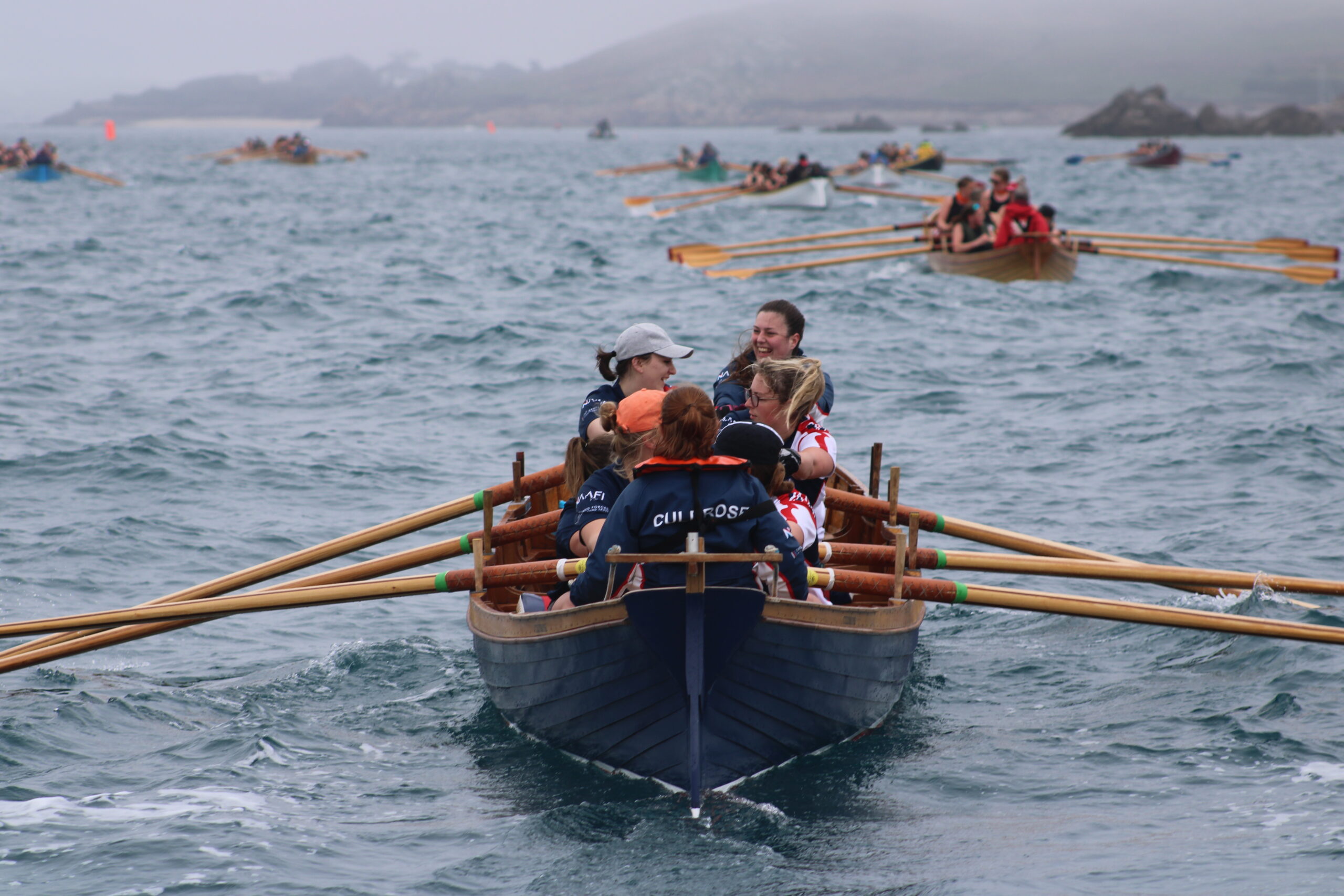
The final checkpoint which many crews use are the ‘Marks’, which roughly indicate 2 minutes to go (or 60 strokes). Off the bowside, these are indicated by a white square on top of Taylor’s Island, which will line up with a white diamond just below the golf club. Off the stroke side, this tends to be when the Bishop Lighthouse Lines up with the second Haycock.
By this point, all the crews will be close together – the finish line is narrower than the start line. Make sure you drive your crew straight through the line and don’t stop at the chequered buoy – this may have drifted from the tide and boats crossing the line are captured by a camera from the quay.
Good luck to all those coxing and happy racing!

No Comments on "Preparing To Cox At WPGC"